
Robot welding
Start with the right project basis
Robot welding does not start with the robot — it starts with the process. RoboConnect helps you clarify needs, capacity, quality, variation and constraints before you contact suppliers.
Free and without obligation for industrial companies under the current model.
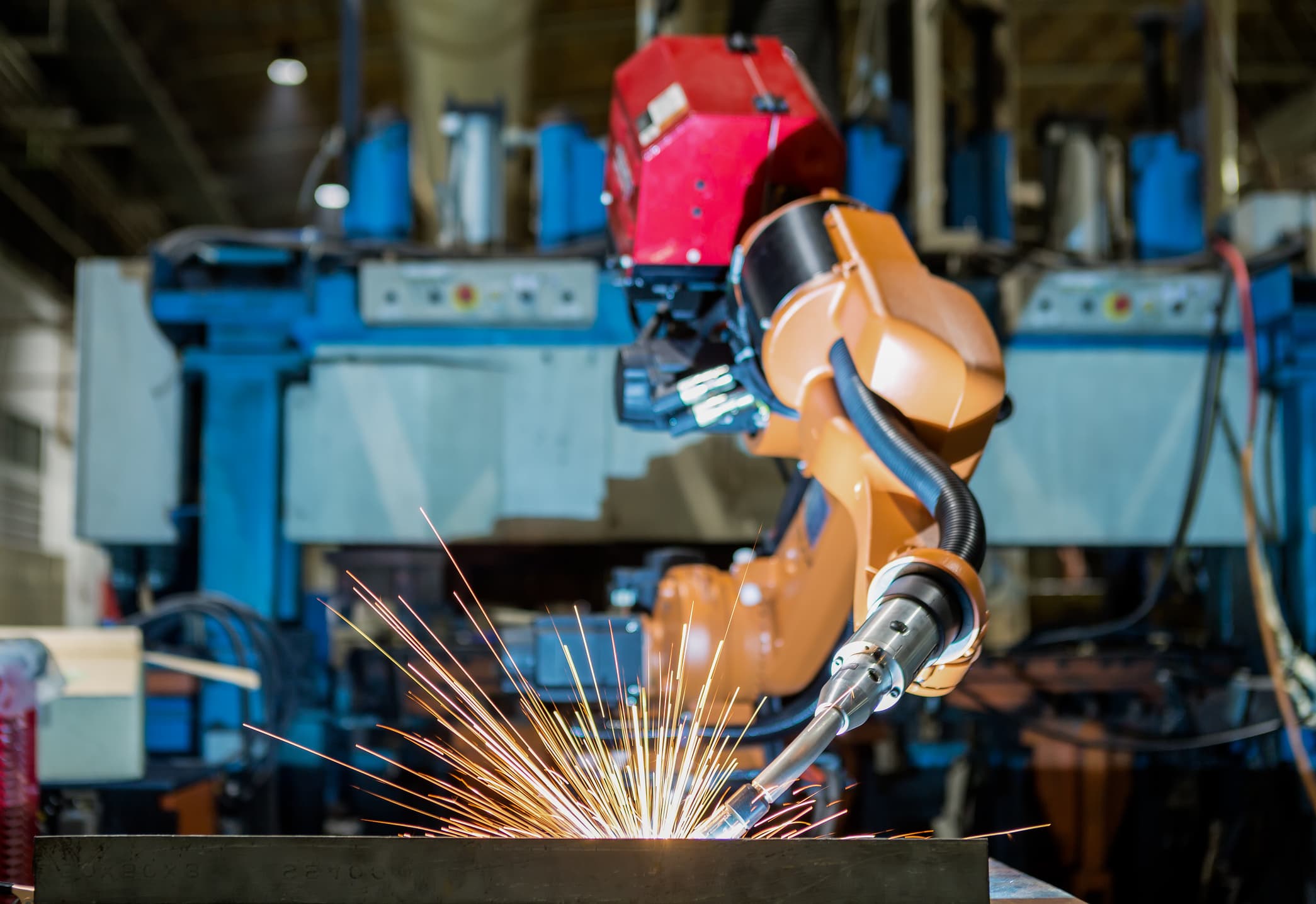
The challenge
Robot welding does not start with the robot — it starts with the process
Many start by thinking about the robot first. In practice it is the process, the variation, the quality requirements and the production flow that decide whether the project succeeds.
Capacity constraints and bottlenecks in the welding process
Variation in quality, tolerances or manual execution
An unclear basis before talking to integrators and suppliers
The whole solution
A welding robot on its own does not solve the problem
Assessing robot welding properly means looking at the whole solution. It is not only the robot arm, but also fixturing, material handling, safety and how the solution fits into production.
Fixturing and clamping
The robot cell has to handle how parts are positioned and held stable throughout the process.
Flow and handling
Infeed and outfeed, product variation and material flow decide whether the solution actually works in production.
Safety and integration
Robot welding has to fit existing health and safety requirements, staffing, equipment and production environment.
How RoboConnect helps
A mature basis before the supplier dialogue
RoboConnect gives you a more mature project basis before the supplier dialogue starts. That makes the project easier to assess — for you, and for the actors you talk to.
- 01Structure needs, goals, variation and constraints before you go to the market
- 02Make the project easier to understand, assess and compare for relevant actors
- 03Identify system integrators, technology suppliers or R&D actors that are relevant to your project basis
The needs clarification
What a needs clarification should typically cover
A solid project basis makes it easier to judge whether robot welding fits, and what has to be in place for the solution to be robust.
- Volumes and batch sizes
- Weld types and materials
- Tolerances and quality requirements
- Product variation and changeover
- Today's workflow and bottlenecks
- Needs for handling, fixturing and safety
When does robot welding fit well?
- When you have repeating welding operations or high volumes
- When recruitment or capacity makes manual welding vulnerable
- When you want more consistent quality, traceability or better use of your resources
When do you need to be extra thorough?
- You have small batches or high variation between products
- Tolerances, clamping or product flow are demanding
- The process needs more than a robot arm alone to work well
Get a better basis before you contact suppliers
With a clearer project basis it becomes easier to assess solutions, compare input and enter into dialogue with actors that are relevant to your project.